First error messages (unapproved) regarding reduced performance of the CO catalytic converter in the DME error message memory were recorded around at 300.000 km. Typically – driving with the cruise control, driving with a very low speed/load (around 60 .. 70 km/h, 6th gear), with spark plugs that have not been cleaned for a long time. After cleaning the spark plugs, the problem disappeared for some time.
For the first time, the error message regarding the performance of the CO catalytic converter was approved at 350.000 km. Conditions were previously. Unfortunately, the problem progressed very fast. By 380.000 km, the error message was approved already by 80 .. 85 km/h. Yes, the cleaning of the spark plugs (and heating of the catalytic converter during this procedure) helped, but by 400.000 km the error message appeared, driving 100 km/h with cruise control.
Despite the catalytic converter’s reduced performance, my car passed the yearly TI (at 380.000 km) without any problems. With spark plugs, used for around 30.000 km, the CO/HC test indicated the following results:
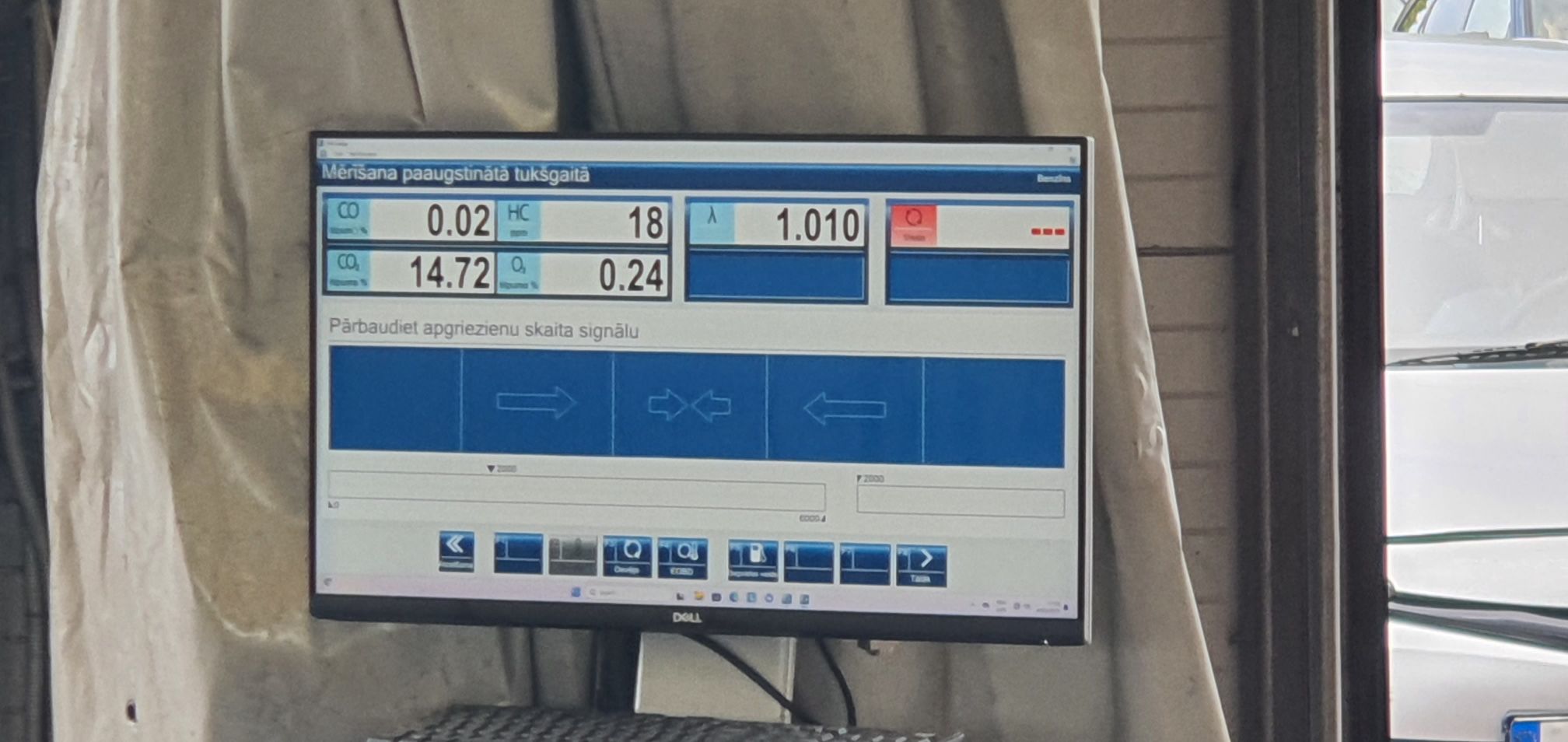
CO: 0.02% (limit: 0.3%)
HC: 18ppm (limit: 200ppm).
As we see, the actual values of both parameters are at least 12 .. 15 times lower than the allowed ones. Without a load, everything is perfect, but on the go, the performance of the catalytic converter is insufficient (at least by the understanding of DME).
Several nuances:
a. for these DME, the manufacturer has created two types of “Check engine” events. One: Drivetrain malfunction, second: Emission control. If in the DME error message memory the error message “Drivetrain malfunction” is recorded, the appropriate notice appears on the NBT screen, and the engine’s power is reduced. Instead, Emission control does not reduce the power of the engine, and no additional notice appears in the NBT screen;
b. with a recorded error message regarding the performance of the CO catalytic converter, I observed low-quality idle. Obviously, the vector method to even out the idle is disabled;
c. Also, after recording the error message, DME continues to monitor the performance of the CO catalytic converter and deletes “Check engine” if the performance of the CO catalytic converter in certain driving conditions is sufficient;
d. around 300.000 km from the total mileage of 400.000 km I drove in Sport/Sport+ modes with installed Performance and Sound kit. As we can conclude, this kit does not damage the CO catalytic converter.
Taking into account the solid reserve in TI tests, I could choose to create a “solution” on how to cheat DME. But it would mean postponing the problem for an unknown and unpredictable time. That’s why I chose to install a new catalytic converter. If the catalytic converter (in my driving conditions) serves for around 400.000 km, I will not have to worry about this hub for the next 5 years (If I choose to use this car for such a long time).
The price of a new BMW catalytic converter in December 2025 is around EUR 1600. You will have to add Lambda probes (they will cost around EUR 300), several rings (the price is several tens of EUR), to the expenses. The old catalytic converter must be returned to the seller (it will be sent to BMW AG for recycling). The seller may request a deposit (it will be around EUR 2000 – even more than a new catalytic converter!).
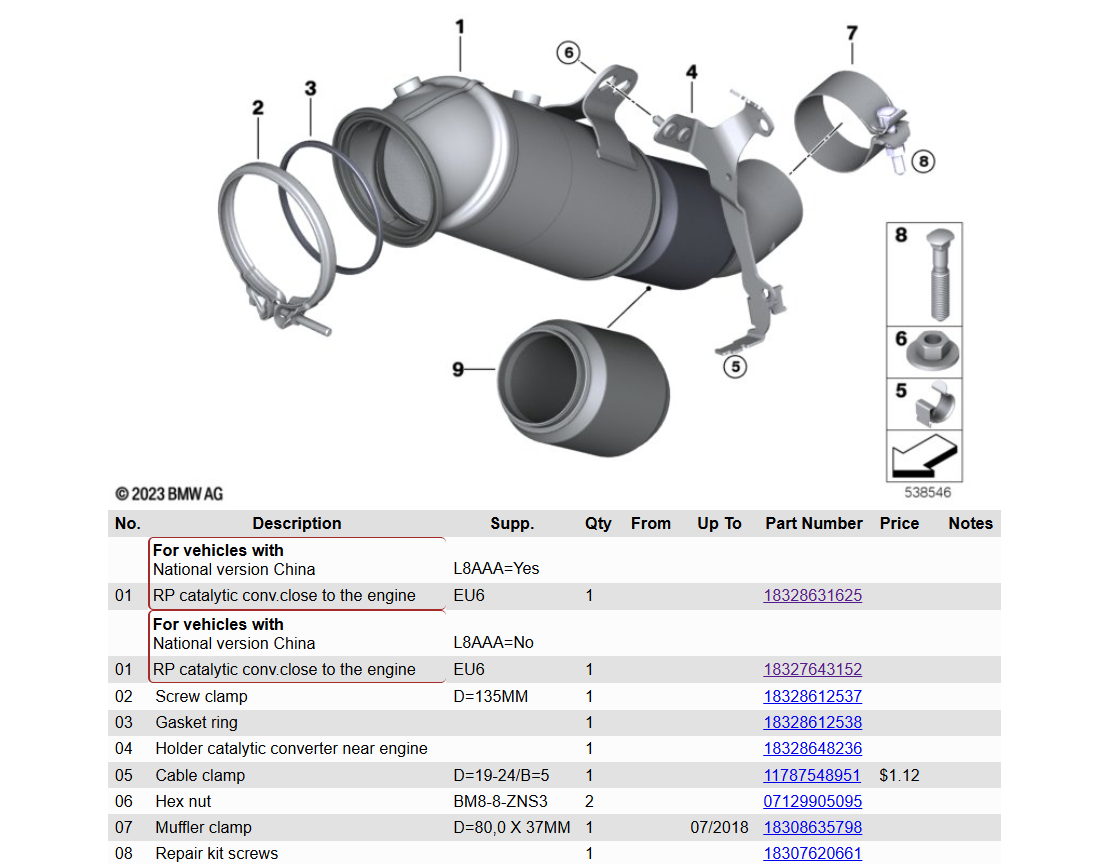
Mandatory replacement parts:
a. catalytic converter [1]
b. gasket ring [3]
I strongly suggest replacing also:
a. screw clamp [2]
b. muffler clamp [7]
And, here, the new spare parts have arrived:
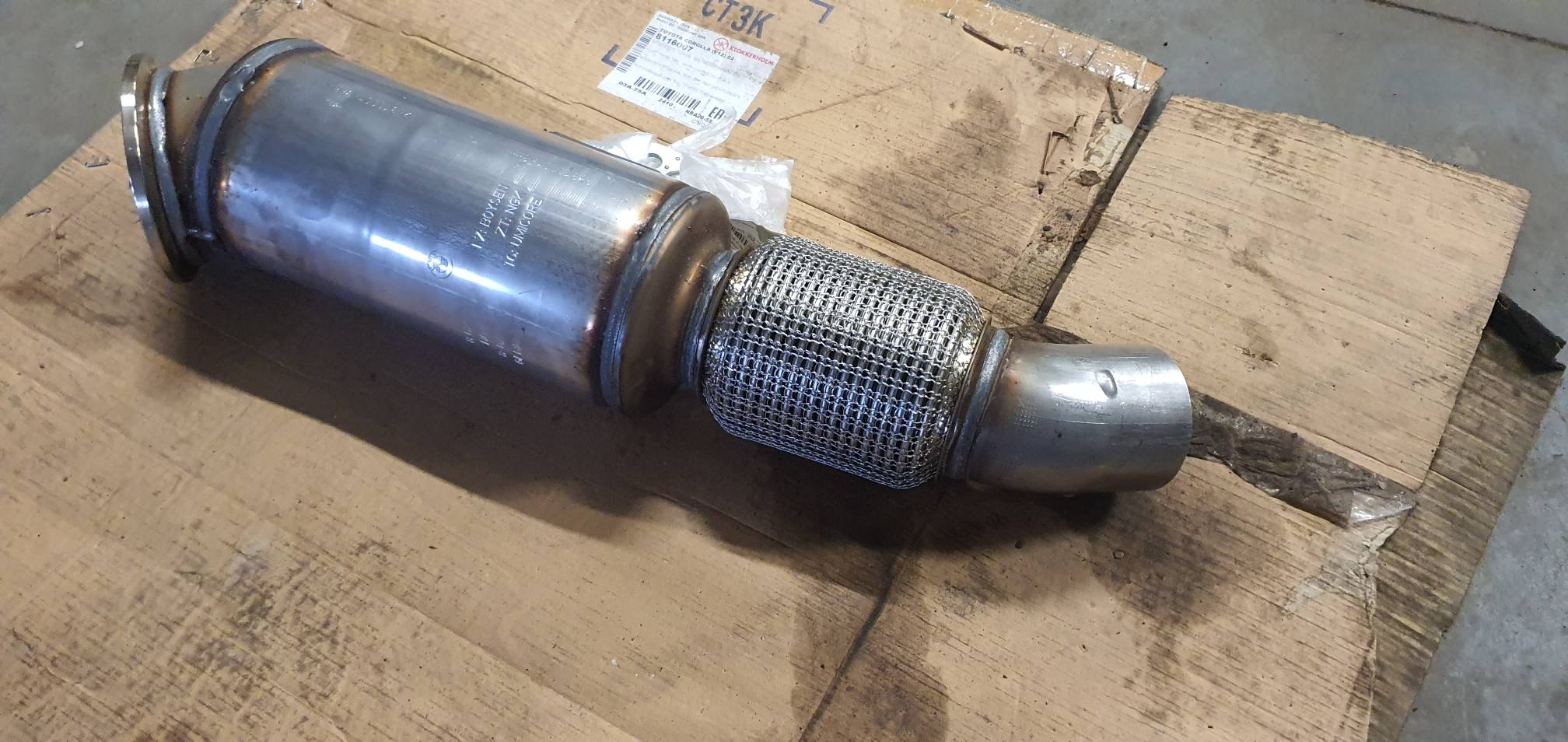
If we take a look at the “grid” of the CO catalytic converter, we can clearly see that the information in TIS regarding the construction of two different catalytic converters is correct.
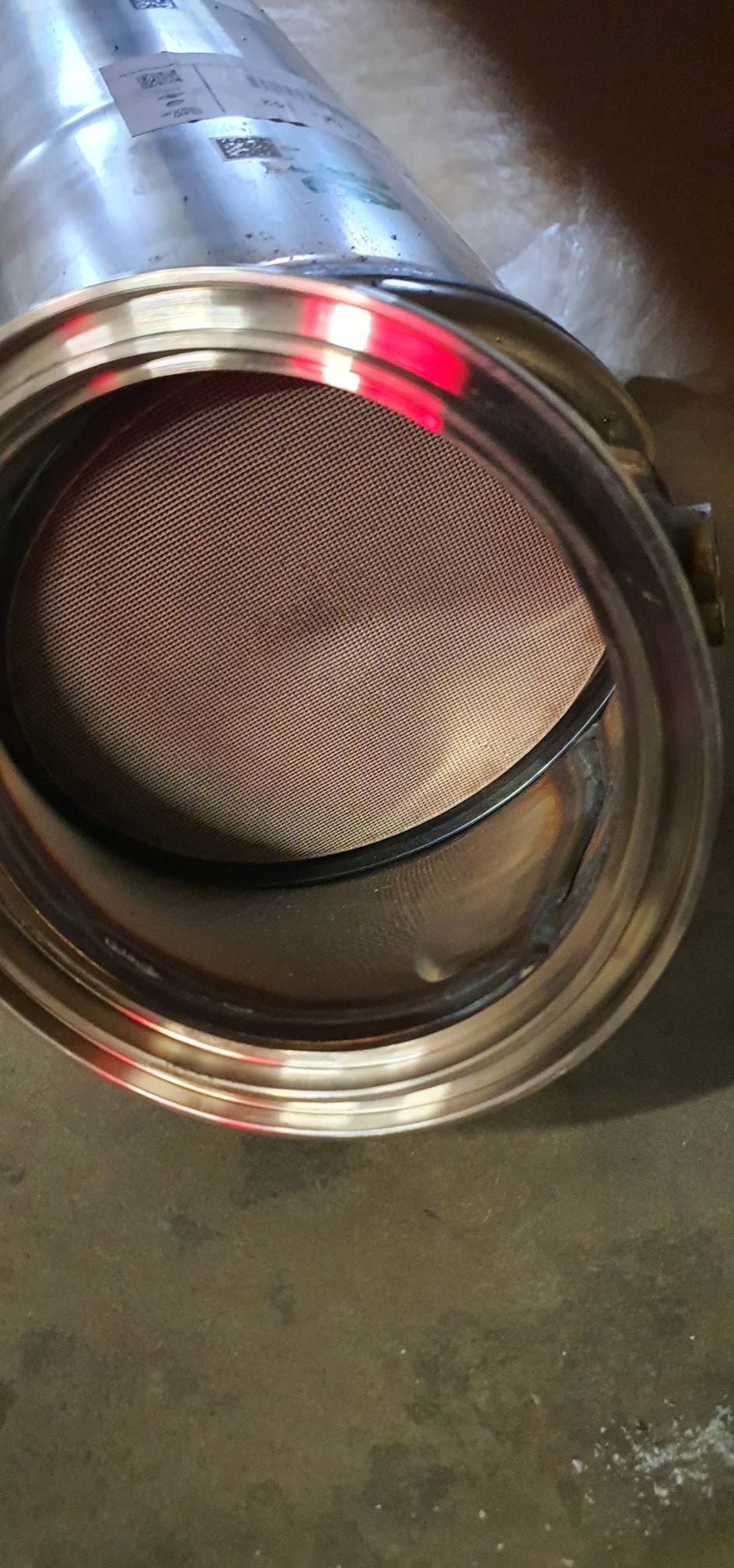
From the side of the engine, we can see a fine grid – this catalytic converter works at idle and in low-load driving conditions.
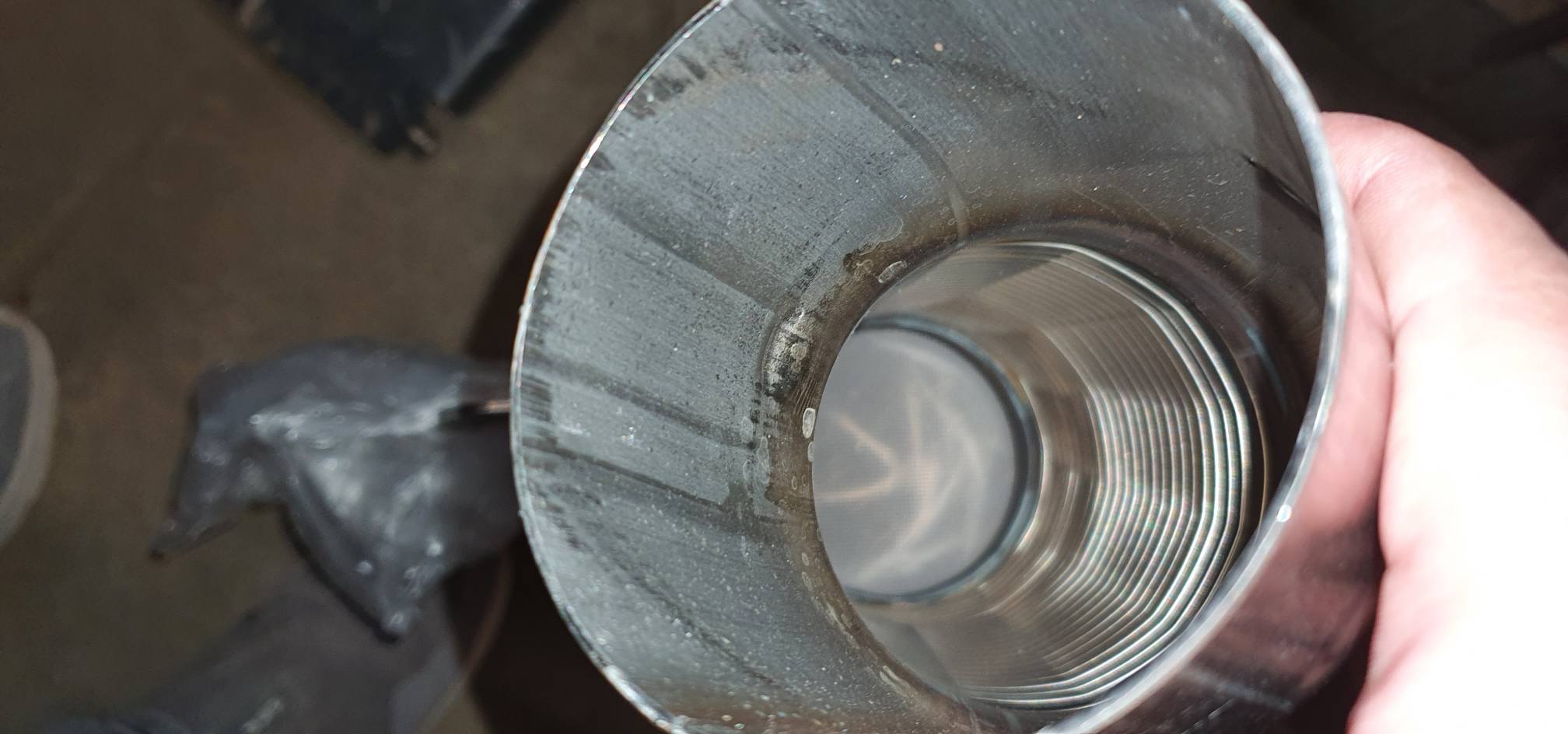
Behind the first catalytic converter, follows a “rough” – this catalytic converter is intended for driving conditions of a larger load.
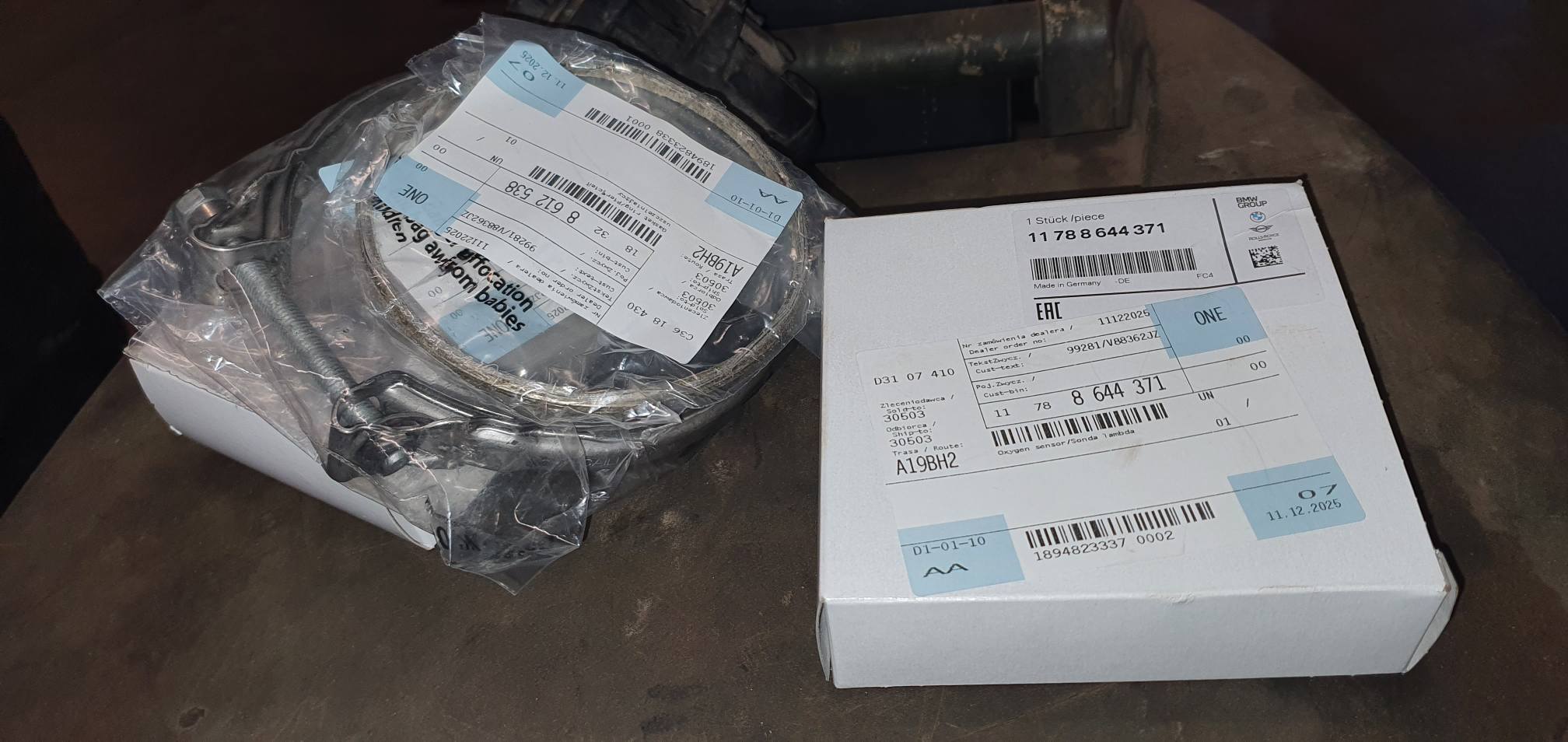
Here, the clamps and Lambda probes, offered by BMW.
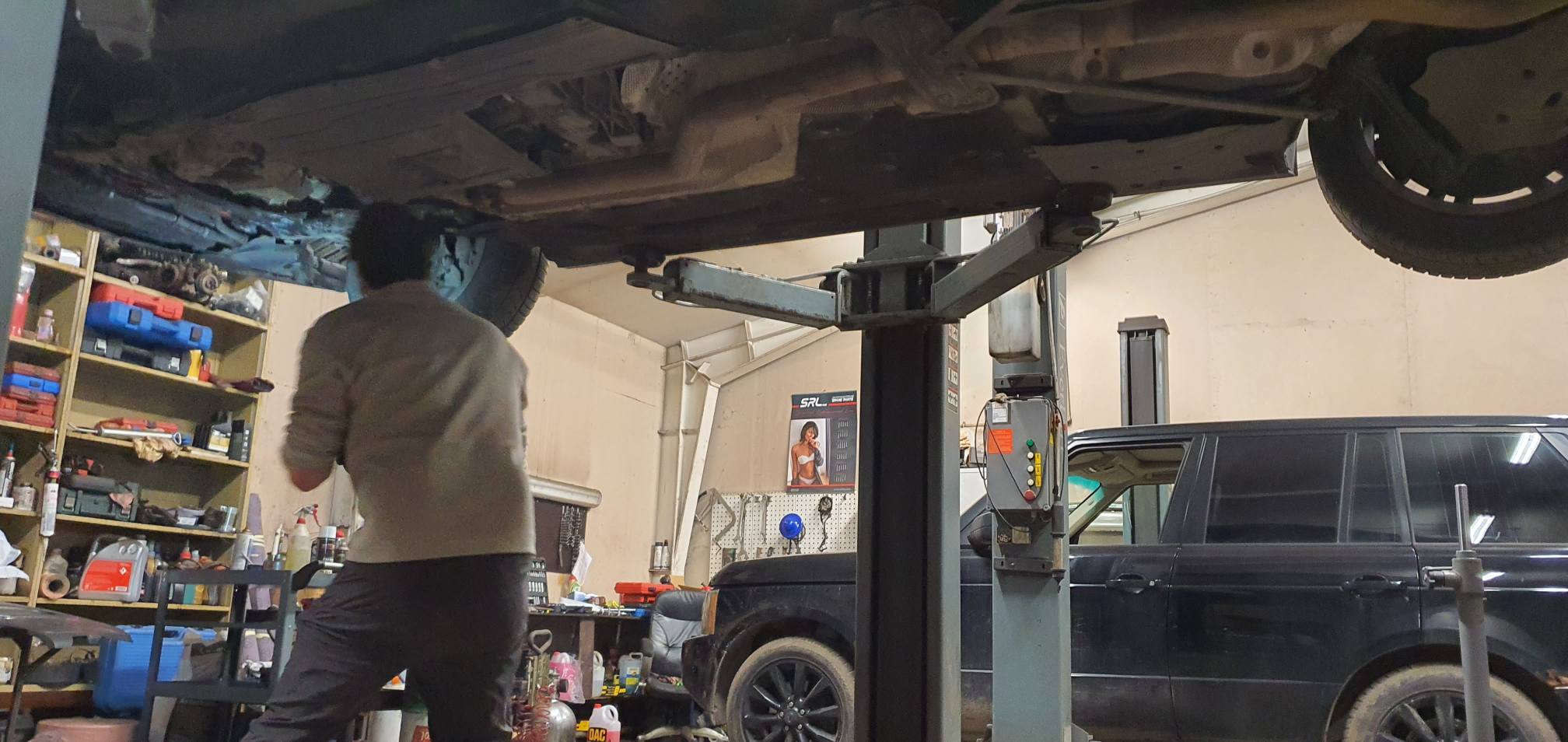
Dismantling process of the catalytic converter.
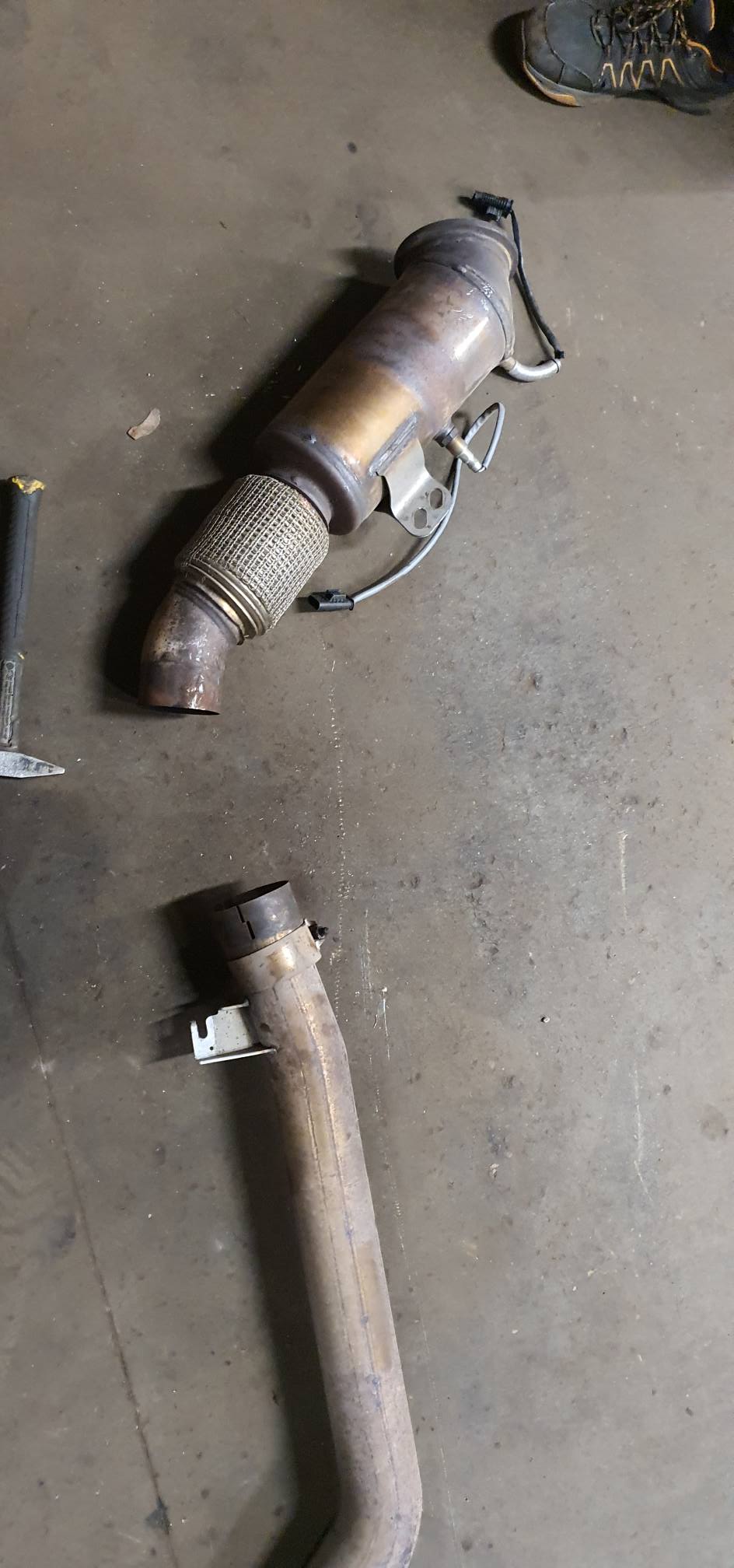
Let’s see how the worn-out catalytic converter looks:
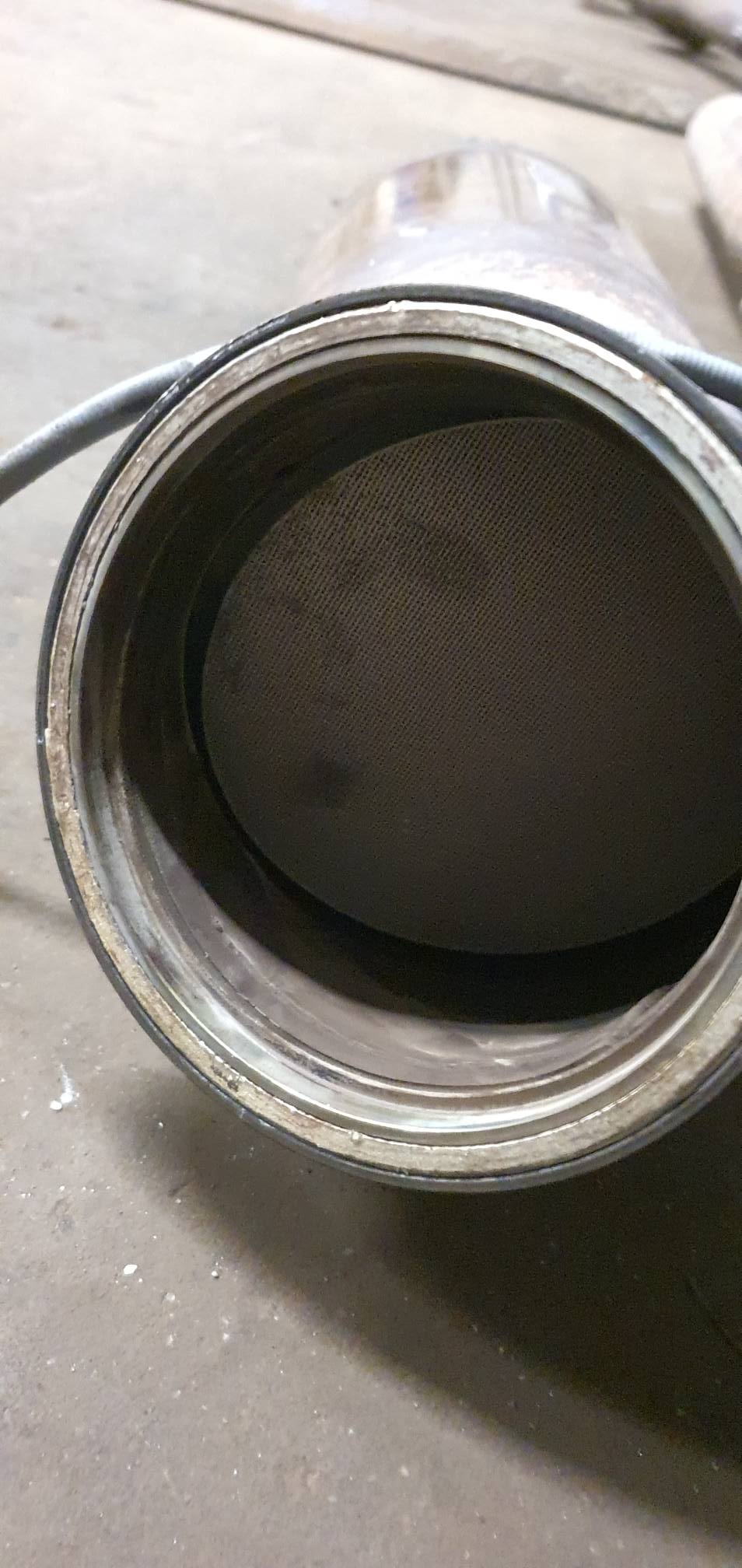
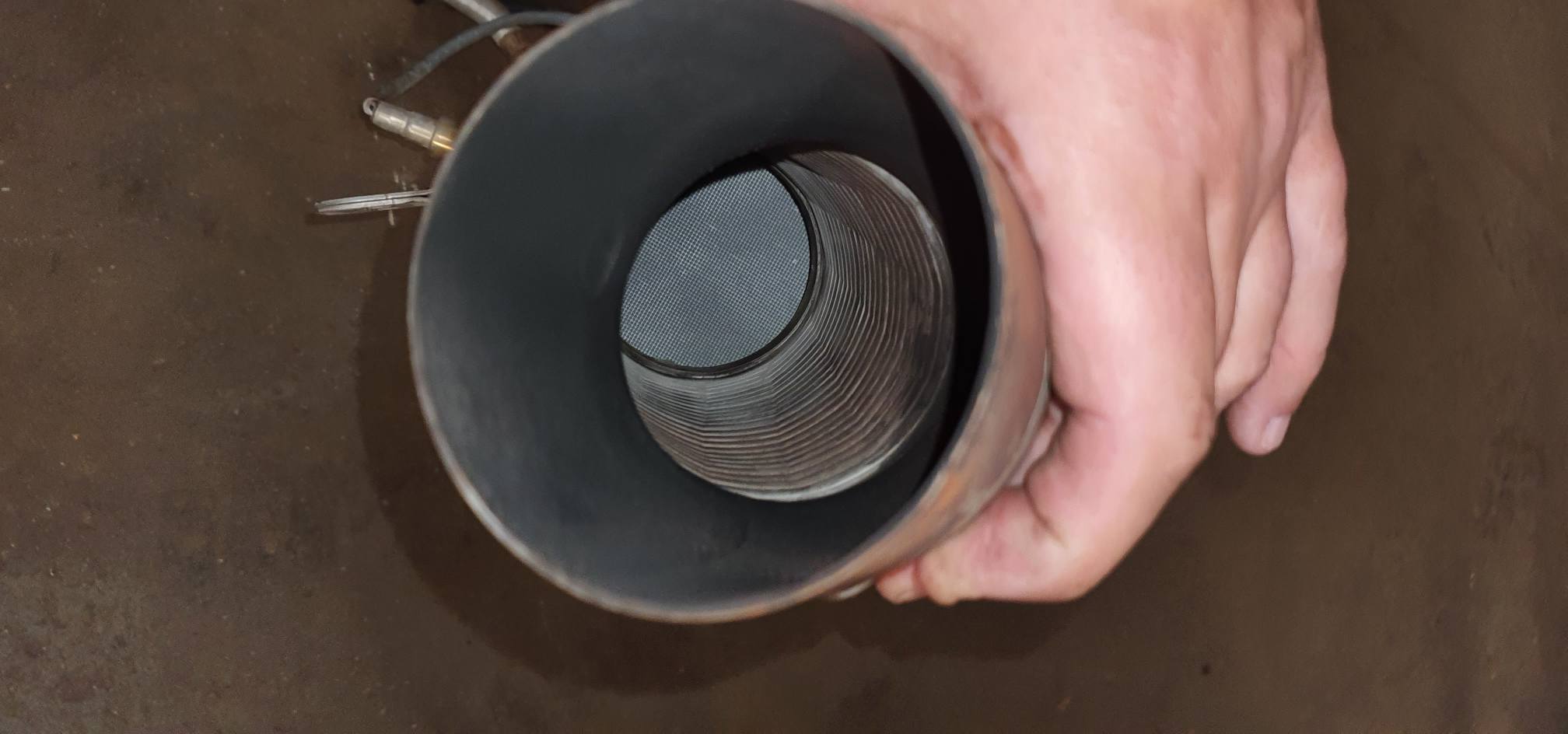
The catalytic converter shows no signs of overheating or damage! The most direct proof that throughout the entire time of the car’s exploitation, the fuel mixture has been correct is that the catalytic converter is not damaged, either thermally or mechanically.
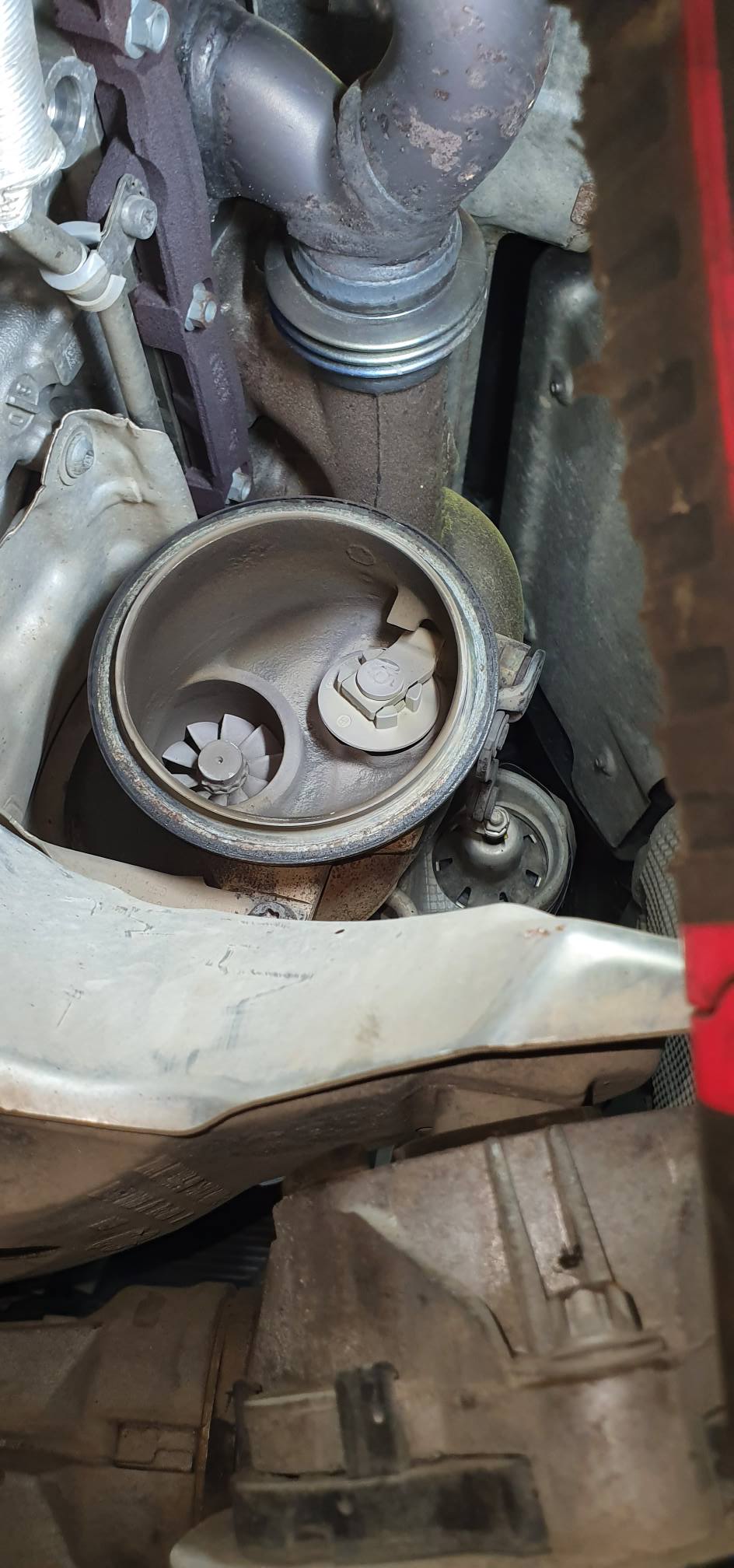
Here is how the turbo aggregate, which has served for 400.000 km, looks. Not a slightest sign of oil leakage. Radial clearance – ZERO. The rotor turns easily, as if it were a new turbine.
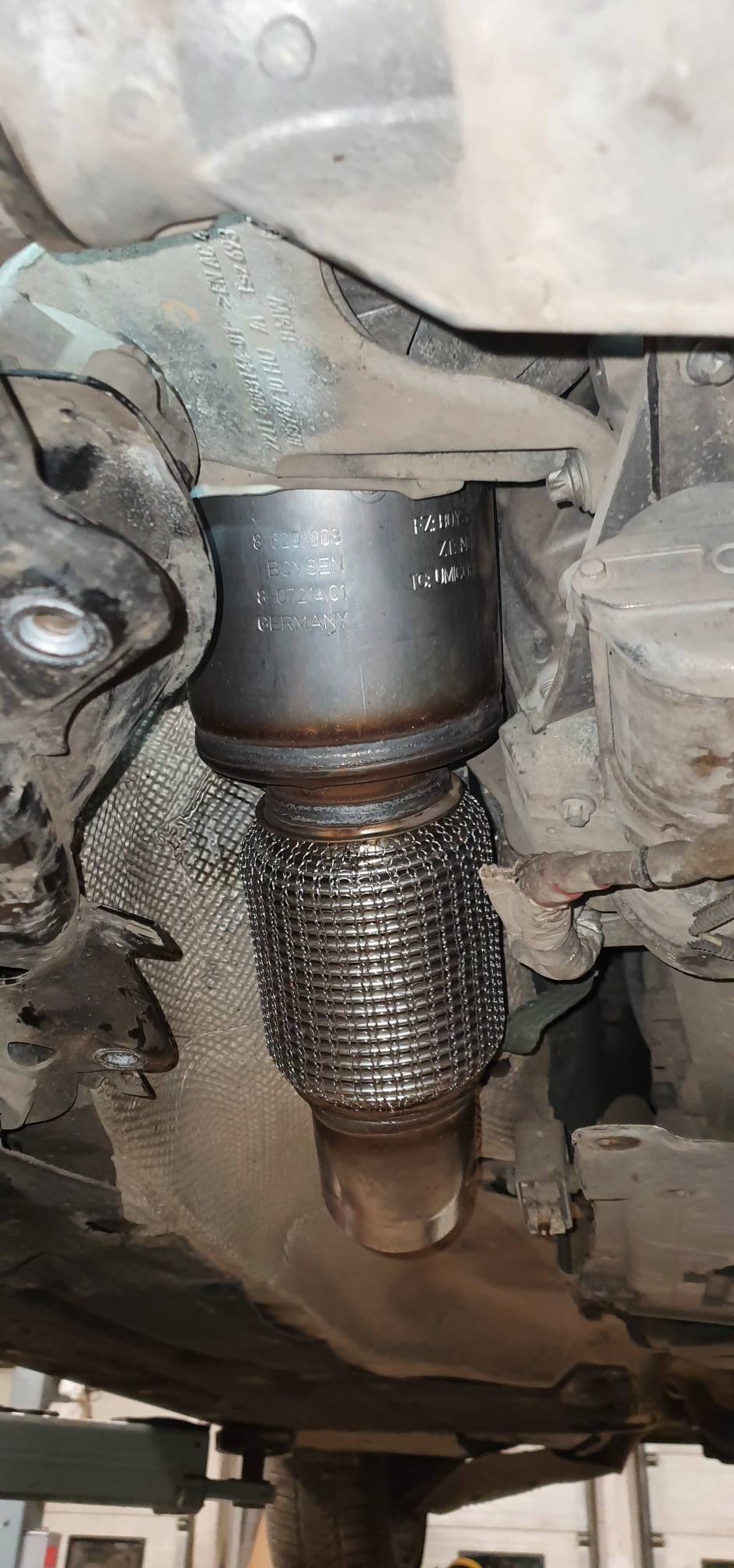
And here the new catalytic converter is fixed.
The replacement of the catalytic converter was performed without any problems. You just have to follow the repair sequence suggested by TIS.
What are my conclusions?
My car is proof – if the fuel mixture is correct, no harsh crashes/misfires are allowed, the CO catalytic converter will serve for a long time. More than 350.000 km, even despite the increased power and “popcorn” in Overrun mode.
Resource of the turbo aggregate – impressive. I was ready to replace it if there were even the slightest signs of wear or oil leakages. No, the turbo aggregate looks as new; the replacement of it would be completely unjustified.
