Thank you to the BMW community for ideas for new entries. Many things that seem obvious to me turn out not to be so to others. Even more interesting is that these seemingly obvious things are not obvious to specialists.
This time, a topic that was brought up by a local chip tuner.
He (like me) has the car, equipped with a B58 engine.
I chose the Performance and Sound kit offered by the manufacturer; he – software upgrades made by himself (to be more precise, a file prepared by 3rd parties was uploaded to the 3rd-party software).
My car has a manual gearbox; his car has an automatic gearbox.
Our argument arose on the following topic: I claimed that for my car, WG is completely closed in the range of 5000 .. 7000 RPM (in 1st .. 3rd gears). I claimed that (for my car) even in second gear, WG is completely closed, as if there were no large increase in torque (from 450Nm to 500Nm). Even more, I can add – if the car is used adequately, in the 1st gear, even with closed WG, the engine is not able to reach 500Nm, not even 450Nm.
The tuning specialist, knowing his car’s performance, started to protest: “It is not possible, because it is not possible.” To my argument, all the difference is in the gearbox, he continued to protest. Say – what does it (turbo, WG) have to do with the automatic gearbox! Does the turbine “blow” worse?
I will try to be very concise and as simple as possible. So that even an unprepared reader will find it interesting.
For the turbo to work effectively/fulfill its task, its rotor has to rotate at the intended speed. For the turbo rotor to turn at the intended speed + ensure the required air pressure in the inlet manifold, some basic things must be fulfilled:
a. There has to be an appropriate exhaust gas amount/pressure/energy;
b. the mechanical inertia of the turbo rotor must be overcome (the rotor must be supplied with energy to turn);
c. “pump up” both exhaust tract (the exhaust gases have to “fill” the exhaust manifold) and inlet manifold (its “fulfillment” requires time/energy too).
Accordingly, the turbo has two “turbolags”:
a. first lag – connected with RPM (assuming that the throttle is open for 100%). By low RPM, the turbo (even over an infinitely long time) can’t really turn in because there’s no exhaust gas energy;
b. second lag – dynamic lag. It means that all processes that require additional energy also require time to supply this energy. To “grow” the pressure in the exhaust tract (even if the required RPM and exhaust gas flow are reached), time is needed. For the turbo rotor to spin (even if there is required gas pressure in the exhaust), time is needed. For the turbo to “pump up” the inlet pressure (even if it spins at the perfect speed), time is needed.
Where lies the difference between a manual and an automatic gearbox? Start sequence:
a. with a manual gearbox, not demolishing the clutch: for example, with 2000 RPM, we press the accelerator pedal to the end and release the clutch rapidly. Thanks to the energy stored in the engine flywheel, the car starts moving rapidly. At the same time, RPM drops for a moment, then swiftly increases. At around 6500 .. 7000 RPM, the driver shifts the gearbox into second gear and rapidly releases the clutch (to avoid burning it). RPM drops swiftly, then resumes to increase;
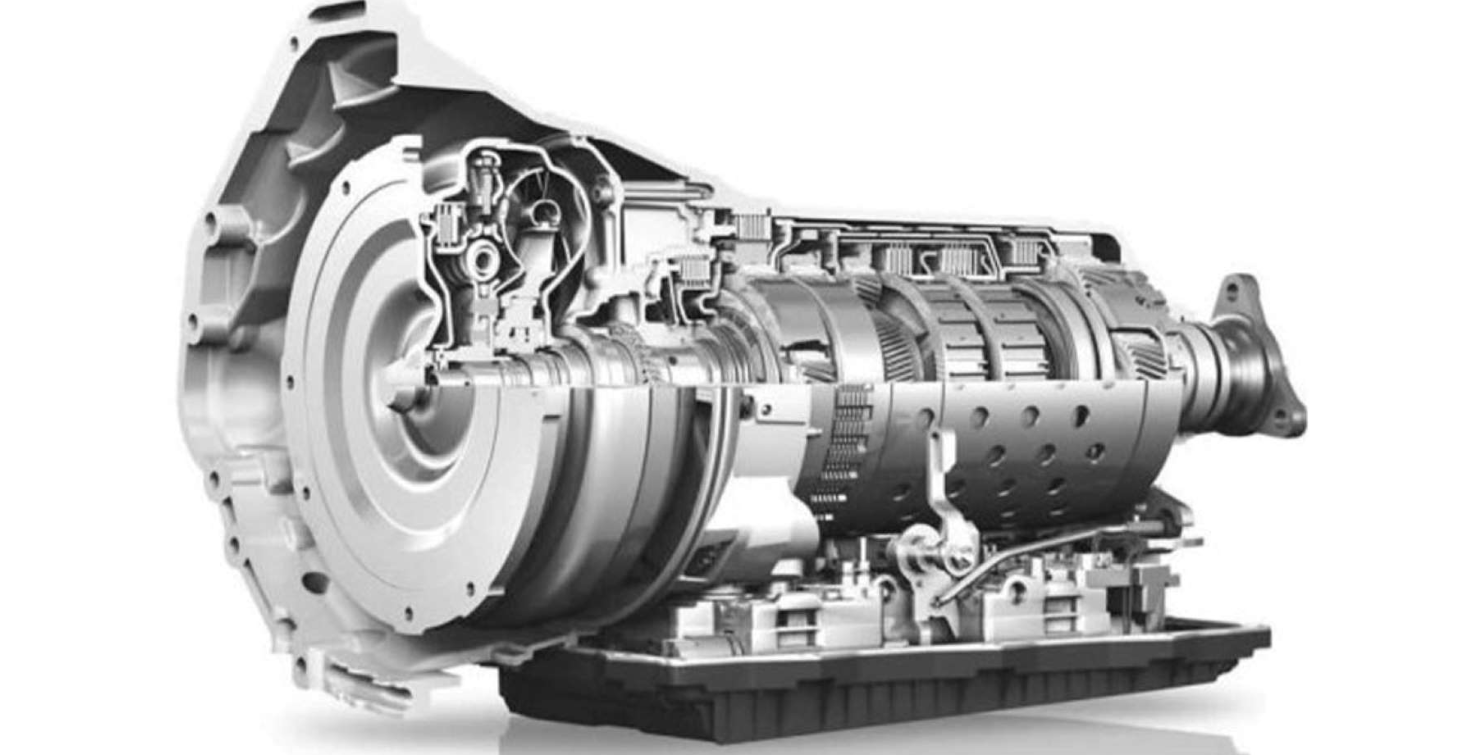
b. with automatic gearbox: the gearbox maintains a larger load on the engine (slippering torque converter clutches, accordingly, the turbo has much larger energy to start to spin. Releasing the brake pedal and pressing the accelerator, the torque converter is not blocked, and the RPM does not drop. Yes, a large amount of heat energy is released in the gearbox, but at the same time, the engine also rapidly develops much more power. Larger power means larger energy to the turbo. Also switching gears, the torque converter is not blocked, the engine RPMs are maintained higher (yes, again – gearbox taking more thermal load).
c. with automatic gearbox, Launch control: for several seconds, increased (3200 and even more) RPM and increased load to the engine are maintained. All the load of the engine is being “accumulated” in the gearbox (and is released into the heat). The engine has large exhaust gas energy, which spins the turbo very efficiently. At the same time, also in the flywheel, additional/maximal mechanical energy is accumulated.
I think that from prem previously mentioned simple conclusions arise: if the turbo has to spin “from zero”, it will spin later that the turbo, which is already “spinning”, before the car starts movement, or is efficiently shinned in the first second (even as if a lot of energy is as if “wasted” by heating up the gearbox).
Accordingly, yes, unfortunately, with the manual gearbox, the turbo “blows” worse! Someone, possibly, will oppose – but you can slip the clutch, where is the problem? Yes, it is true, you can slip the clutch. But – for how many times?
For the automatic gearbox, there is oil cooling + an additional cooling radiator. There is nothing of it for the clutch. One disc, which can be “cooked” very fast.
Not without reason, for example, for M series cars, the Launch control is available for only 3/5 seconds (depending on release), and actual tests show that is enough with 3 spurts for the gearbox to be cooled for a longer time (Launch control is forbidden/disabled for some time).
A short summary: by such power (as it is for B58 series engines), the manual gearbox does not stand any chances. If you are interested in the fastest drag times, use an automatic gearbox. The manual gearbox and the clutch are “slower” in all aspects. Both switching the gears and “spinning” the turbo. The human reaction is slower, the ability to “hit” exactly the border of the red line at the moment of witching gears – also weaker. All this leads to poorer turbo performance (as a result of lower peak RPM, not fully open throttle, etc.). It makes sense to choose a manual gearbox if you like to switch the gears yourself.
I believe there is no need for me to explain in detail why WG “behaves” differently in the case of a manual gearbox. The situation is simple – the turbo is spinning “worse”, WG tries to compensate for this problem to reach the required Boost pressure. Until it’s managed, WG is closed, ensuring the maximum possible energy for the turbo’s performance.
