
Select a technical image to view it in detail.
On the Internet, several “manufacturers” offer “sports” ignition coils. Prices and looks differ (the stylish coloring matters most), but all these offers have a lot in common. I will not name the seller, because it is not crucial. I almost wrote “manufacturer”, but that would be completely wrong.
What the sellers promise
The pitch is always the same: their “sports” ignition coils are the best, misfires disappear and power increases. For example:
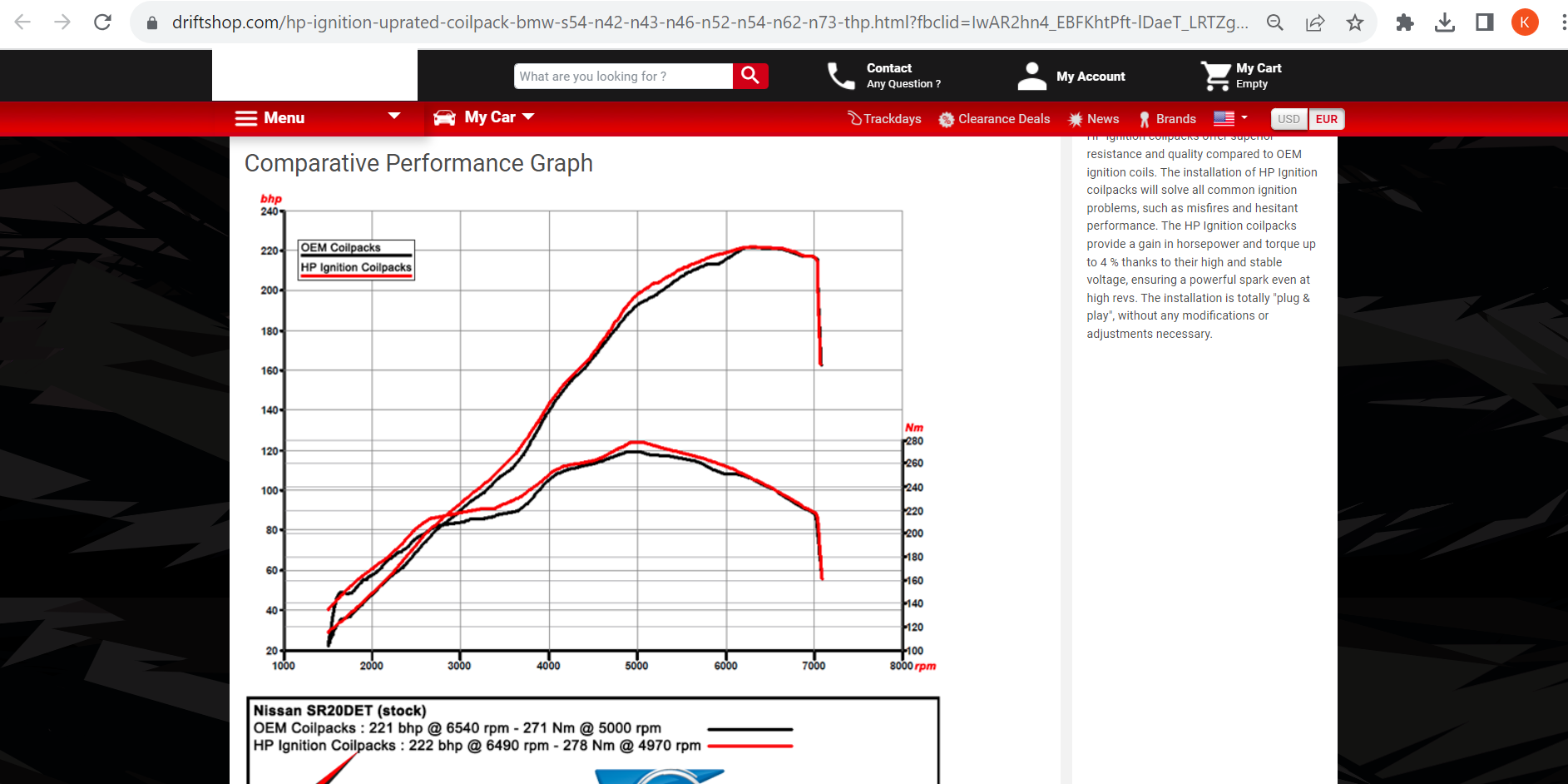
“Torque gain is till 4%.” The keyword is “till” (up to). They don’t even lie, because the actual gain is 0%. The graphic, though, is a complete fake. Everyone who works with petrol engines knows that in kick-down mode the cylinders are filled with an enriched fuel mixture. All the air sucked into the combustion chamber is burned, and there is no air left in the exhaust. Whatever the ignition does, there is no way additional energy can appear. A “sports” air filter would give more at high RPM! Nor does the measurement methodology hold up: the possible accuracy of a dyno stand is several times lower than the indicated “gain”.
The argument about misfires does not withstand criticism either. An engine in good technical condition has no misfires, and there can be none. If misfires can be felt, the cause has to be found and fixed. It may be an incorrect fuel mixture or incorrect injector performance (especially on DI engines: poor atomization, an incorrect spray pattern). It may be a problem with VANOS or Valvetronic, or with the engine itself (valves not closing, a damaged piston group). No ignition coil will help there, even in a “megasuperturbo” edition. If the spark plug is worn out or damaged, replace it. If the ignition coil is damaged, simply replace it.
The spark from the stock ignition coils is powerful enough to ignite the fuel properly. It is not a case of “it will ignite eventually”. A correctly running engine has no misfires over one, two or three hours, and in that time it goes through around 100,000 combustion cycles.
So my claim is that “sport” ignition coils are not needed. They cannot give any gain, and they do not give any. You may object that they at least do no harm. Well, there are some nuances.
What these coils really are
Let’s look at these coils. For example:
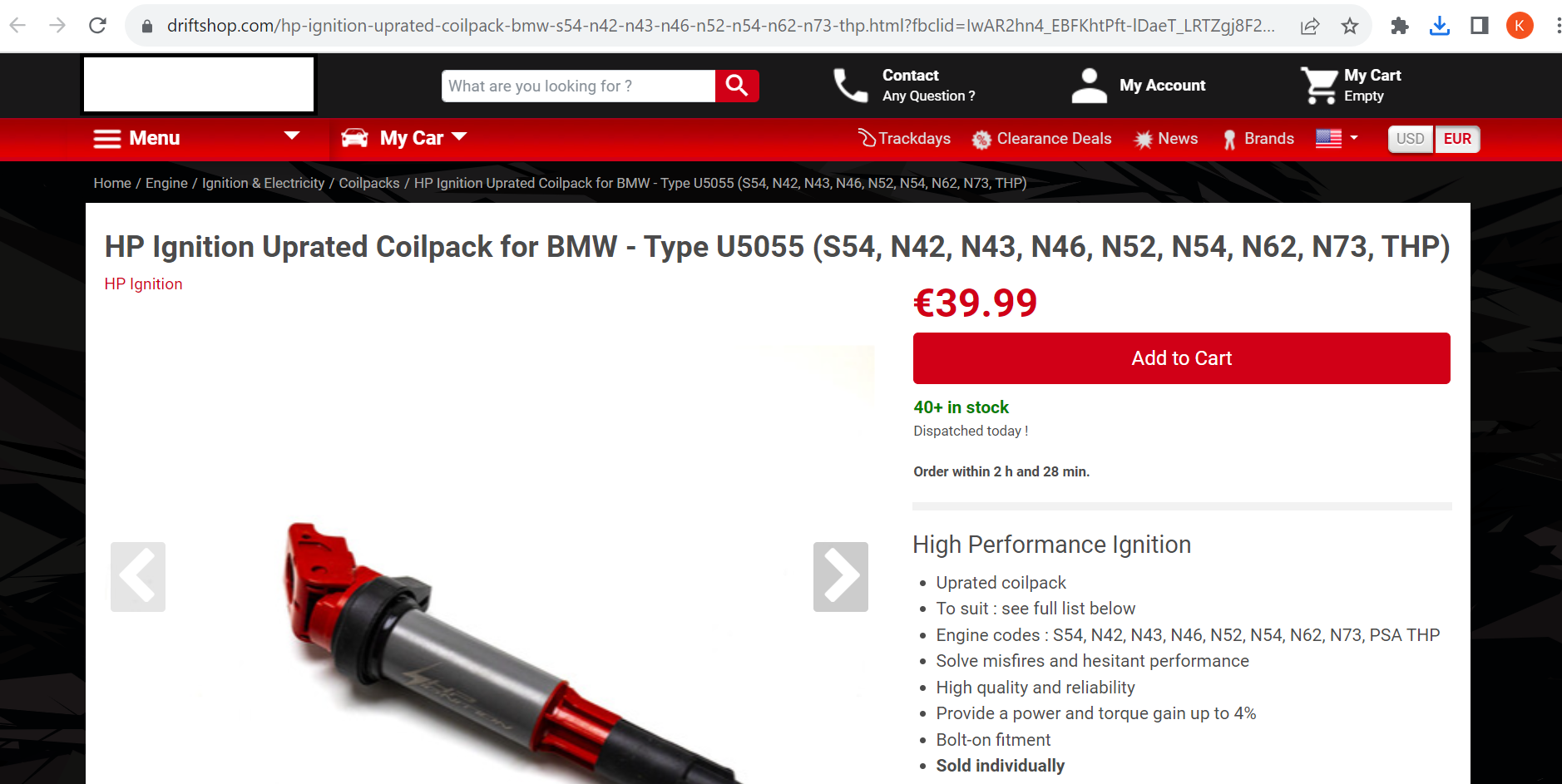
They look nice, with a red plug and a red stripe on the tip. Now look at this ignition coil:
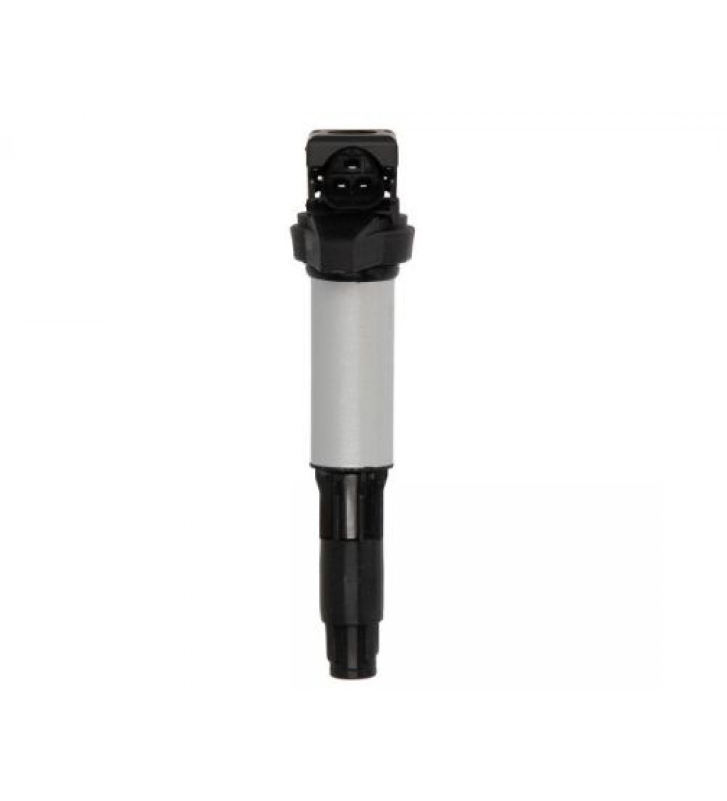
Suspiciously similar, isn’t it? It is the cheapest of more than 20 available alternatives: an Engitech ENT960045. The wholesale price is around EUR 5..7 per piece, and the retail price EUR 15..19. Of course, you can buy it for a higher price too, for example:
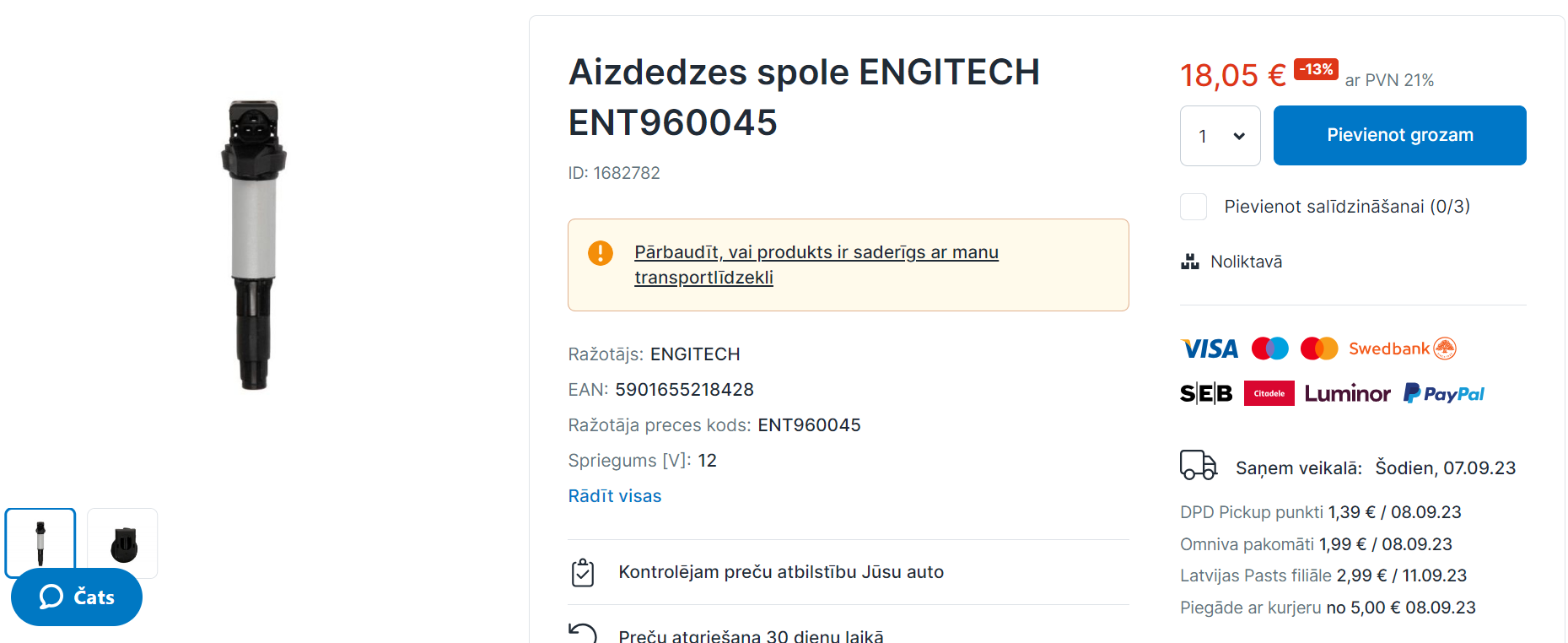
So how are these “sport” ignition coils “manufactured”? It is simple. Take the cheapest possible analog (cheap Chinese production has no logos or part numbers on the body), paint the plug with aerosol paint, and the “sports” ignition coil is born.
A cheaper route is possible too: approach a Chinese craftsman. If you order some 1000 ignition coils, you receive them with the plugs already painted and the logo applied, at a great price. You only have to build a decent webpage, and the “business” can go on.
Can they do harm?
Now the harshest part. A painted plug is not a big issue, but can there be real harm? In one of the FB groups, the owner of an N43 engine ran into a problem:
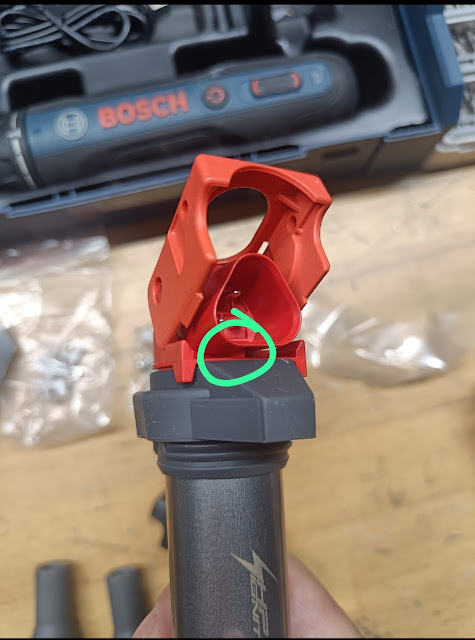
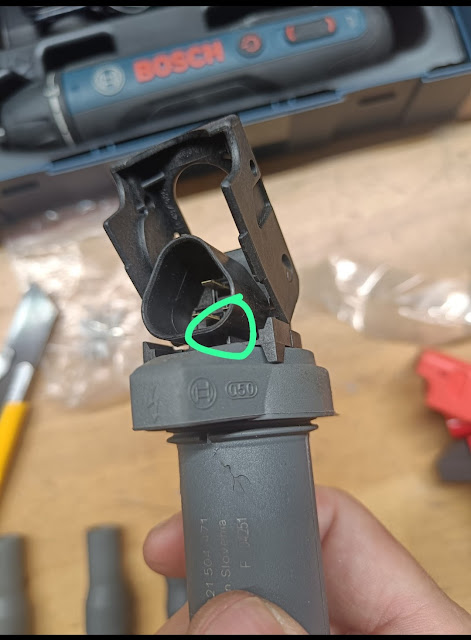
The ignition coil in the lower image is the stock Bosch. The upper image shows the “sports” version. The problem is that the “tooth” in the plug socket differs between the two coils.
Why was such a key created? To make it impossible to plug the wrong coil into a given engine. There is obviously a reason for that, and it is explained below.
The car owner put the question to the “manufacturer”. This is the answer:
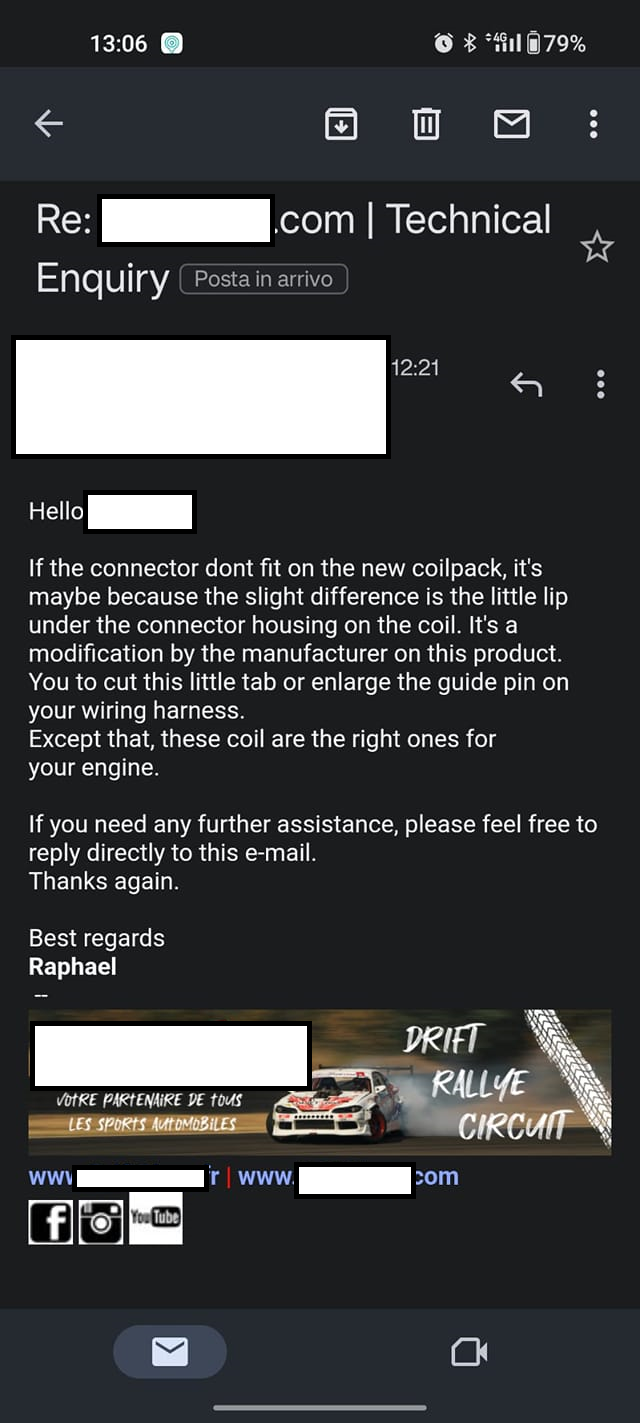
Really? Simply cut off the “key”?
Three fundamentally different coil groups
For BMW engines, ignition coils can be divided (very simplified) into three groups:
- “Regular” coils for the “old” port injection engines (for example M50/52/54, N52).
- “High energy” coils for DI petrol engines (for example N54, N63).
- “High energy” coils specifically for N43/N53 series engines.
All these coils look similar. The only visible difference is the “key” in the plug socket. The electrical parameters, however, are significantly different:
- Regular, port injection: the primary winding inductance lets the current rise to 5..6 A in around 3 ms; transformation ratio 1:50.
- DI engines: current rises to 9..10 A in around 2 ms; transformation ratio 1:50..1:80.
- N43/N53: current rises to 9..10 A in around 2 ms; transformation ratio 1:100.
Why such differences? The coils of DI engines have to be “faster”. At idle and in some other modes, the DME uses a multi-ignition mode (to improve exhaust gas readings and keep the spark plugs dry), and these engines run at high RPM. DI engines also need a more powerful spark, because the fuel mixture in the combustion chamber is not homogeneous and burns worse.
The N43/N53 series differ even more. The spark plug air gap is 1.2..1.4 mm instead of the regular 0.6..0.8 mm, almost twice as large. Twice the voltage is therefore needed to jump this gap, and this is solved by changing the transformation ratio (the ratio of winding turns) of the coil.
So, depending on the engine, there are three fundamentally different groups of ignition coils.
Now consider the offer for the “sports” coils: they can be used in the N42 and N46 (older port injection engines), the N63 (DI engine), and even the N43. How is that possible? Is it the perfect universal coil? In fact, the cheapest Chinese ignition coil is claimed to suit everything. Of course, it does not.
Consequences
- A coil intended for port injection engines, installed in a DI engine: the spark is weaker than necessary, misfires appear much sooner and the idle quality is much lower.
- A coil intended for DI engines, installed in a port injection engine: the DME ignition switches are overloaded, and sooner or later some of them will be damaged. The current through these switches is 2 times higher, and 2.5..3 times more heat is released in them. With the correct coils the switch temperature is around 50 °C; with these coils it rises to 90..100 °C. The spark plugs also wear prematurely. The gain is zero.
- A coil installed in an N43/N53 engine: in stratified charge mode, misfires are guaranteed. This mode will be switched off, and error 3104 (E series) or 143101 (F series) will appear. Misfire density in homogeneous mode will also increase.
I hope I have convinced you that the sellers of such ignition coils are simply fraudsters. Unfortunately, they have no understanding of the product they sell; they are repackers of cheap Chinese surrogates. Keep away from such “sports” ignition coils.
P.S. A few days later, the author of the post mentioned above wrote: “I installed the red ones, but I have misfire and uneven running engine at low rpm. Is it possible that this coils are totally wrong? Or they are defective maybe?”
This is not a surprise to me.